Clear communication of duties and agreed working hours are the most important factors for farm workers when choosing to work on an Irish farm, according to a new survey conducted by FRS Farm Services.
The 2026 Survey of Farm Relief Operators, the only nationwide barometer of farm labour in Ireland, provides valuable insight into what on-farm workers value most and what the agriculture sector must address to attract and retain talent.
Clear Communication Ranked Most Important
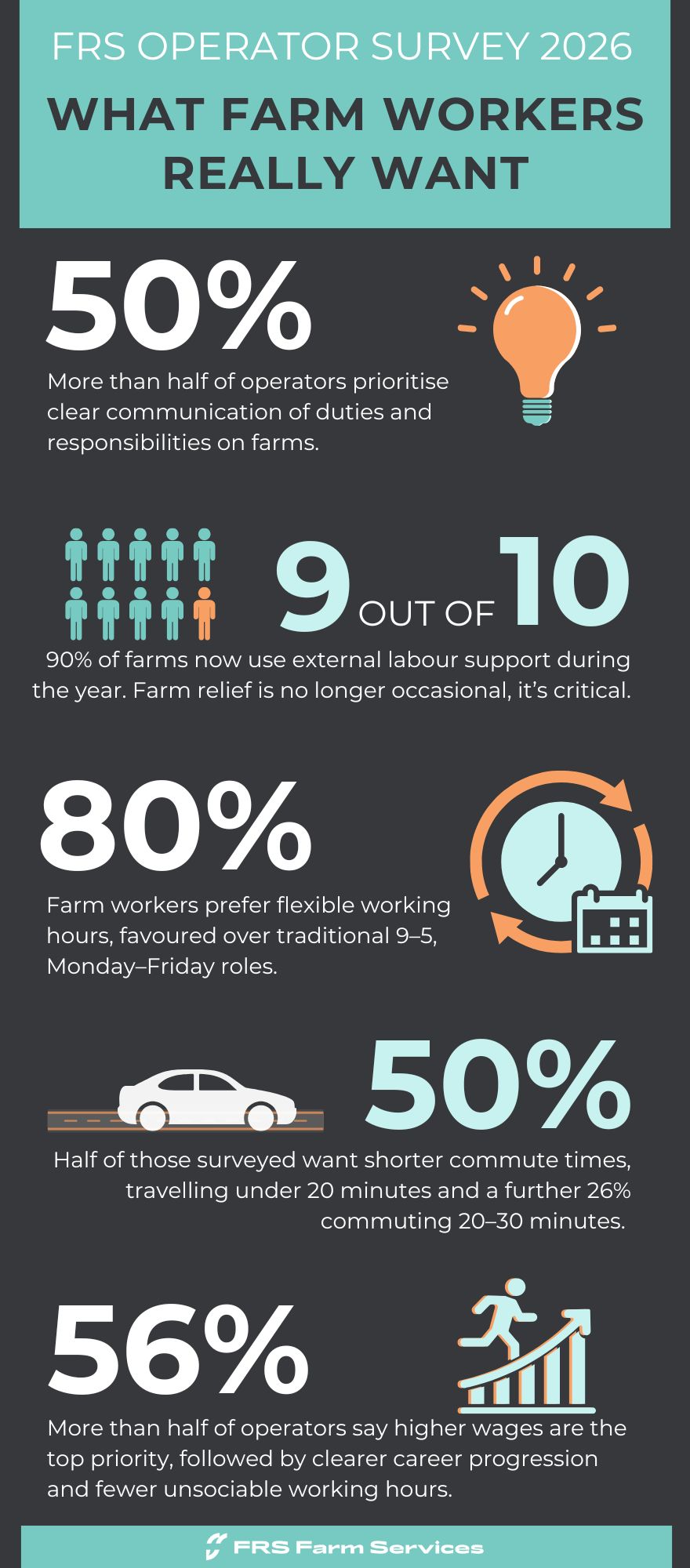
More than 50% of farm workers surveyed identified clear communication of roles and responsibilities as the single most important quality in a farm owner or manager.
This was closely followed by proper rostering and agreed start and finish times, with 44% of respondents ranking defined working hours as a key factor when deciding whether to work on a farm.
The findings highlight the growing importance of structure, clarity and professionalism in modern farm workplaces, particularly as farms continue to expand in scale and complexity.
Ireland’s Growing Reliance on External Labour
The survey comes at a time when Ireland’s farming industry is increasingly reliant on external labour, with 9 out of 10 farms now using outside support at various points throughout the year. As farm workloads continue to rise, particularly within the dairy sector farm relief operators play a vital role in maintaining productivity, animal welfare and work-life balance for farm families.
The annual FRS Co-Op survey provides critical insight into the expectations, motivations and challenges facing this essential workforce.
Flexibility Valued Over Fixed Working Patterns
The survey also reveals that flexibility remains a major attraction of working in agriculture. Over 80% of respondents said they prefer flexible working hours on farms rather than structured schedules such as a traditional 9-to-5, Monday-to-Friday working week. This flexibility, combined with local employment opportunities, continues to make farm work an appealing option for many workers across rural Ireland.
Short Commute Times a Key Advantage
Commute time emerged as another major factor influencing job choice. Over 50% of farm workers reported commute times of less than 20 minutes. A further 26% said their commute was between 20 and 30 minutes.
The vast majority of respondents stated that short commute times are an important consideration when choosing to work in farming offering a clear advantage over urban-based employment.
What the Sector Must Improve to Attract and Retain Staff
When asked what the agriculture industry must do to retain existing employees and attract new entrants, farm workers were clear in their priorities:
– Higher wages was cited by more than 56% of respondents
– Clearer career progression pathways
– Reduced unsociable working hours
The findings reinforce the need for long-term workforce planning, improved visibility of career opportunities in agriculture, and continued investment in people.
Industry Commentary
Commenting on the findings, Neil Keane, Head of Agriculture at FRS Co-Op, said:
“The expansion of the dairy sector since the end of EU milk quotas has placed more demands on Irish farms and significantly increased workloads. To manage this challenge, the majority of Irish dairy farmers now rely on some form of external labour to help run their farm business efficiently. However, as we can see from the 2026 operator survey, farm workers place a lot of value in farm owners and managers that can clearly communicate roles and responsibilities.”
“The survey also shows that 75% of farm workers prefer daily commute times of less than 30 minutes. This compares very favourably to commuters travelling over 20 hours per week for jobs in urban centres. It’s something the sector can promote more to enhance the attractiveness of a career in farming.”
Supporting a Sustainable Farm Workforce
As Ireland’s agricultural sector continues to evolve, the 2026 FRS Co-Op Survey of Farm Relief Operators provides clear guidance on how farms can strengthen their workforce:
– Communicate expectations clearly
– Agree working hours in advance
– Promote flexibility and local employment
– Invest in fair pay and career development
By addressing these areas, the sector can improve retention, attract new entrants, and build a more sustainable future for Irish farming.
Read the Irish Farmer’s Journal article here.
Interested in becoming an FRS operator? Apply here.